Premium jumped at renewal? Nonrenewed? Closing on a deadline? Call or text us your situation — a named specialist reviews valuation, wind and flood structure, and carrier fit, and responds within 24 hours.
Confidential. Nothing is presented to any market without your written approval.
From the address alone we can pull year built, construction, roof, elevation and flood zone — most of what carriers ask for. A declarations page or renewal fills in the rest. You review our findings before any market sees the account.
Elevation, opening protection and distance to open water drive both carrier eligibility and pricing. Most declines are geography, not the house.
What brings you here?
Get us the declarations page — whichever way is easiest.
Forward the renewal or policy email to:
We'll draft the request — you send it from your own email so they know it's really you.
When will you have it in front of you?
Read by one licensed specialist. Never sold or added to a list; deleted on request. Requesting a review does not affect your current policy, and we do not contact your current agent or carrier without your permission.
Your current policy, renewal, or nonrenewal notice — uploaded, forwarded, or sent by whoever has it.
A specialist extracts what is already documented and asks only for what's missing. No re-typing what we can already read.
You see our findings and the proposed approach first. Then, and only then, the account goes to market.
Nothing is presented to any market without your written approval. A first submission can control a market for your account — that discipline protects your options, not just your privacy.
Not because we found a cheap carrier — because the file was wrong. Construction class entered as frame instead of masonry. Wind mitigation credits never claimed. A roof rated on an assumption rather than a report. Whether it holds for your property depends on the home, the current carrier and how the existing policy was built, which is what the review tells us.
Standard carriers rate the ordinary loss. A coastal high-value home does not fail in the ordinary case — it fails in the rare one: a named storm, a nuclear verdict, a total rebuild under a code that moved. Our principal is published in the American Journal of Actuarial Science on fat-tail liability, and that is the lens we bring to how your limits are set.
Most disputes are decided by language written years before the claim — sublimits, exclusions, ordinance-and-law triggers, definitions of "collapse." Knowing that language at placement is what makes it useful at claim time. It is the same reading, done early.
Florida coastal is our home market, but a portfolio rarely stops at the state line. Second homes, family properties and relocations are placed wherever they sit.
Property held abroad, and owners who live outside the United States. Non-resident ownership is an underwriting inconvenience, not a defect in the risk — placed with carriers that write it routinely.
Access to carriers that write coastal, high-value and complex residential risk. Availability always depends on the property's own characteristics and underwriting.
Twenty years managing insurance operations across more than $100M in premiums. Jenn runs the review process — she's why "24 hours" is a measured number, not a slogan.
Published in the American Journal of Actuarial Science on nuclear verdicts and fat-tail liability. Structures the wind, flood and liability architecture on complex coastal accounts.
Yahoo Finance · Forbes
Pro Asset Management · Wealth Actually
Specialist in high-value homeowners and short-term-rental placements — including the occupancy and rental-use questions that quietly void coverage when answered wrong.
Most Florida homes that become hard to insure are not badly built. They are simply in a situation a standard carrier's form was never written for.
Most homeowners policies contain a construction clause, and it is broader than people expect: while work is underway, a carrier can deny a claim that has nothing to do with the construction. A kitchen fire during a pool-deck rebuild is the classic version.
Liability is the sharper edge. When a subcontractor's worker or a delivery driver is injured on site, the homeowners policy and the contractor's policy often each point at the other — and the homeowner discovers the gap after the fact.
What we do: the right structure depends on the project and the budget. At minimum we resolve the liability question. Where builder's risk is in place, we read it for the sublimits and exclusions that rarely get read — and we would rather find those before the slab is poured than after a loss.
Renting a high-value home — even occasionally, even to friends — changes the occupancy classification on most forms. Owners routinely answer the occupancy question honestly on a policy that was never rated for rental use, and only learn the coverage was compromised when they claim.
What we do: place it on a form written for the actual use, and confirm the liability limits contemplate guests rather than family.
Barrier-island and waterfront homes carry three separate problems stacked on one another: percentage hurricane deductibles sized in six figures, ordinance-and-law limits that assume the building code never moved, and flood exposure well above what the NFIP will write.
What we do: size each against the actual property rather than the round number that was defaulted in.
A nonrenewal notice is usually about the carrier's appetite for a class of risk, not about your house. That distinction matters, because the same property can be perfectly placeable in a market that actually wants coastal exposure.
What we do: work against your deadline first — a mortgage requirement does not wait — and place it properly second.
Multiple properties under separate policies with separate renewal dates, mismatched liability limits and an umbrella that may or may not sit above all of them.
What we do: map what exists before recommending anything, so the umbrella is built on an accurate picture.
Homes held in an LLC or trust, or owned by someone living outside the United States, run into carriers that want a natural person, a US credit file and a domestic mailing address. It is an underwriting inconvenience, not a defect in the risk.
What we do: place with carriers that write these structures routinely, with the named insured set up correctly the first time.
An anonymized coastal file. The owner believed the program was airtight; the review returned four findings.
Five percent reads as a number and arrives as a bill. On this dwelling it was $162,500 — an amount the owner had never consciously chosen. The restructure traded a modest premium change for a deductible they'd actually elect.
Florida coastal code has moved; ten percent assumed it hadn't. Resized against what rebuilding to current requirements actually costs in this county.
NFIP stops at $250,000 on the structure. A private excess flood placement closed the gap between the cap and the true replacement value.
Screened enclosures are excluded or sublimited so routinely that owners assume otherwise. Now scheduled explicitly, with the dock and lift reviewed in the same pass.
No — not without your explicit permission. Many clients are simply verifying their coverage; discretion is assumed, not requested.
No. One document starts the review. We extract what's already in it and ask only for what's genuinely missing — you will not re-type information we can already read.
The declarations page — the first few pages of your policy or renewal packet showing carrier, limits, deductibles and premium. The renewal email attachment is usually exactly this. If in doubt, send what you have; we'll sort it.
Yes, and it's common. Choose "someone else has it" above and we draft the request for you to send from your own email — they send the document directly to us, and you stay in control of the account.
Call rather than upload — deadline placements are a normal part of our work, and the honest answer about feasibility takes one conversation.
They're read by one licensed specialist, stored securely, never sold or added to any marketing list, and deleted on request. Requesting a review has no effect on your current policy.
“Walked me through step by step details of all the benefits and discounts I was entitled to.”
 Lily — initial audit
“The odd thing about it is that she called me a few days later to make sure everything was ok.”
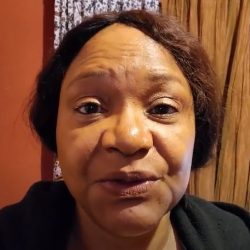 Janice — flood claim
“They handled the home, the auto and the boat together instead of three separate conversations.”
 Paul — multi-policy
Start the review. A named specialist replies within 24 hours.
